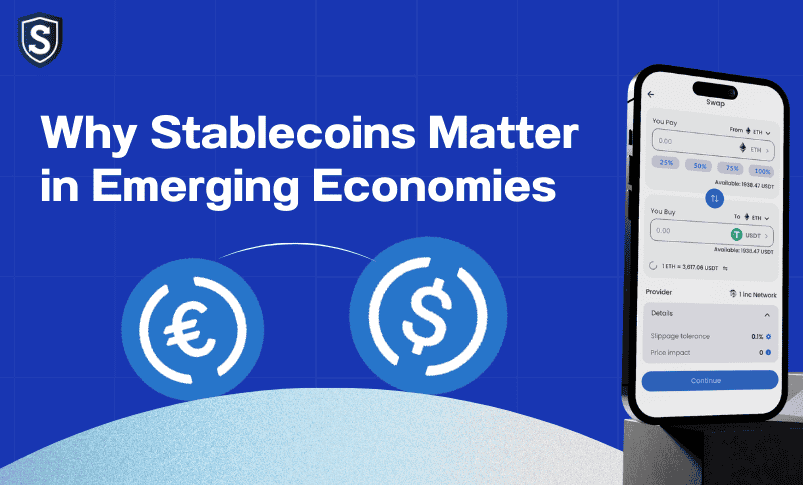
Why Stablecoins Matter in Emerging Economies
In emerging economies, stablecoins are rapidly becoming the bridge between traditional finance and the digital future. By providing a price-stable digital currency linked to fiat currencies like the US dollar or euro, they enable communities to bypass volatile local currencies and complex banking infrastructures. This financial stability opens the door to crypto adoption at a massive scale, especially in nations facing inflation, currency devaluation, or limited access to banking services.
More importantly, AI economies autonomous, algorithm-driven markets require a stable, predictable medium of exchange to function efficiently. Stablecoins serve as the backbone of these AI-powered ecosystems, allowing transactions between humans, machines, and self-driving systems without the disruptions caused by currency volatility
The Role of Stablecoins in Accelerating Crypto Adoption
In developing nations, the challenges of adopting cryptocurrencies are well known: price volatility, poor internet penetration, and distrust in unregulated systems. Stablecoins solve the volatility problem while retaining the benefits of blockchain instant settlement, cross-border
compatibility, and decentralized control.
We are seeing stablecoins power remittances, e-commerce payments, and even payroll systems in countries where traditional banking systems are slow and expensive. For example:
- Workers abroad can send remittances in USDT or USDC directly to family members, avoiding high transfer fees.
- Small businesses can accept payments in stablecoins, instantly converting them to local currency or holding them to preserve value.
- DeFi platforms can onboard users in unstable economies without exposing them to crypto price swings.
This trust in a stable store of value is a key driver for crypto adoption in emerging markets
How SwiftEx Empowers Stablecoin Adoption and Spot Trading
At SwiftEx, we believe stablecoins are the gateway to true crypto adoption and a self-driving economy. That’s why our platform is built to make it effortless for users worldwide to swap volatile assets like Ethereum (ETH) or Bitcoin (BTC) into stablecoins such as EURC or USDC in just a few clicks.
By enabling fast, low-fee spot trading, SwiftEx provides users with the financial flexibility to:
- Preserve value by converting volatile crypto into stablecoins instantly.
- Bridge across chains and manage assets seamlessly in one wallet.
- Access DeFi opportunities while staying protected from market swings.
- Use stablecoins for payments, remittances, and payrolls without worrying about unpredictable price fluctuations.
Whether you are a trader, a small business owner, or simply someone looking for financial stability, SwiftEx ensures stablecoins are always within your reach. Our mission is to make stablecoins the backbone of everyday transactions and accelerate the global shift toward the self-driving economy.
AI Economies and the Self-Driving Economy
The next frontier is the self-driving economy, where AI agents and IoT devices conduct transactions autonomously. Imagine:
- Self-driving taxis paying charging stations directly for electricity.
- Smart factories purchasing raw materials from AI-managed suppliers.
- Digital marketplaces run entirely by algorithms, trading with each other 24/7.
In these AI-driven systems, stablecoins provide the predictable value reference machines need to make decisions. Without them, autonomous transactions would be disrupted by price volatility, undermining the system’s efficiency.
This connection between stablecoins and AI economies is critical they are not just a payment method but the operational currency for a machine-led economy.
Regulation for Stablecoins: Building Trust and Security
For stablecoins to gain widespread adoption in emerging economies, clear and balanced regulation is essential. Governments and financial authorities are moving toward frameworks that protect consumers without stifling innovation.
Key areas of regulation include:
- Reserve Transparency – Ensuring stablecoin issuers hold fully audited reserves matching circulating tokens.
- Licensing and Compliance – Requiring stablecoin operators to meet financial and anti-money laundering (AML) standards.
- Cross-Border Legal Clarity – Allowing stablecoins to operate legally across multiple jurisdictions.
Countries like Singapore, UAE, and Nigeria are creating regulatory sandboxes that encourage experimentation while maintaining oversight. In the long term, strong regulations will help stablecoins integrate into global banking systems and boost public trust.
Corporations and Banks Embracing Stablecoins
The corporate world is increasingly adopting stablecoins as part of their financial infrastructure. Large companies use them for cross-border settlements, treasury management, and global payroll.
Banks are also recognizing their value. Rather than competing with stablecoins, forward-thinking banks are integrating them into their services, offering customers instant transfers, on-chain savings accounts, and blockchain-based lending options.
Examples include:
- JPMorgan’s Onyx platform experimenting with tokenized deposits pegged to fiat currencies.
- Stripe and PayPal enabling stablecoin payments for merchants.
- Emerging market banks partnering with blockchain networks to facilitate instant remittances.
These partnerships validate the legitimacy of stablecoins and push them further into the financial mainstream.
Stablecoins in Emerging Markets: Real-World Impact
In many emerging economies, stablecoins are not just a convenience they are a lifeline. Countries with hyperinflation, like Venezuela and Zimbabwe, are seeing citizens turn to stablecoins as a safe store of value.
In Africa, where 60% of the population remains unbanked, stablecoins enable financial inclusion by allowing anyone with a smartphone to participate in the digital economy. Similarly, in Southeast Asia, stablecoins are powering micro-payments and gig economy earnings, reducing dependency on slow, expensive bank transfers.
The adoption is organic, driven by necessity and trust, not speculation.
The Future of Stablecoins: From Local to Global
The trajectory of stablecoins suggests they will become as ubiquitous as bank accounts in the coming decade. We foresee:
- Integration with Central Bank Digital Currencies (CBDCs) for hybrid systems.
- Expansion into machine-to-machine (M2M) payments for IoT and AI-driven industries.
- Mainstream acceptance by governments for tax payments and subsidies.
The synergy between stablecoins, crypto adoption, and AI economies will define the next chapter of global finance. Emerging markets, often more agile in adopting new technologies, may lead the world in creating fully self-driving economies powered by stablecoins.
Conclusion
Stablecoins are not just another cryptocurrency they are the foundation of the next generation of financial infrastructure. In emerging economies, they solve real problems: inflation, lack of banking access, and slow cross-border transactions. When combined with AI economies and autonomous systems, they form the currency of the self-driving economy.
For corporations, banks, and governments willing to embrace them, stablecoins represent an unparalleled opportunity to lead in the new era of digital finance.
Join the decentralized revolution with SwiftEx trade smarter, safer, and on your own terms.
Follow us on