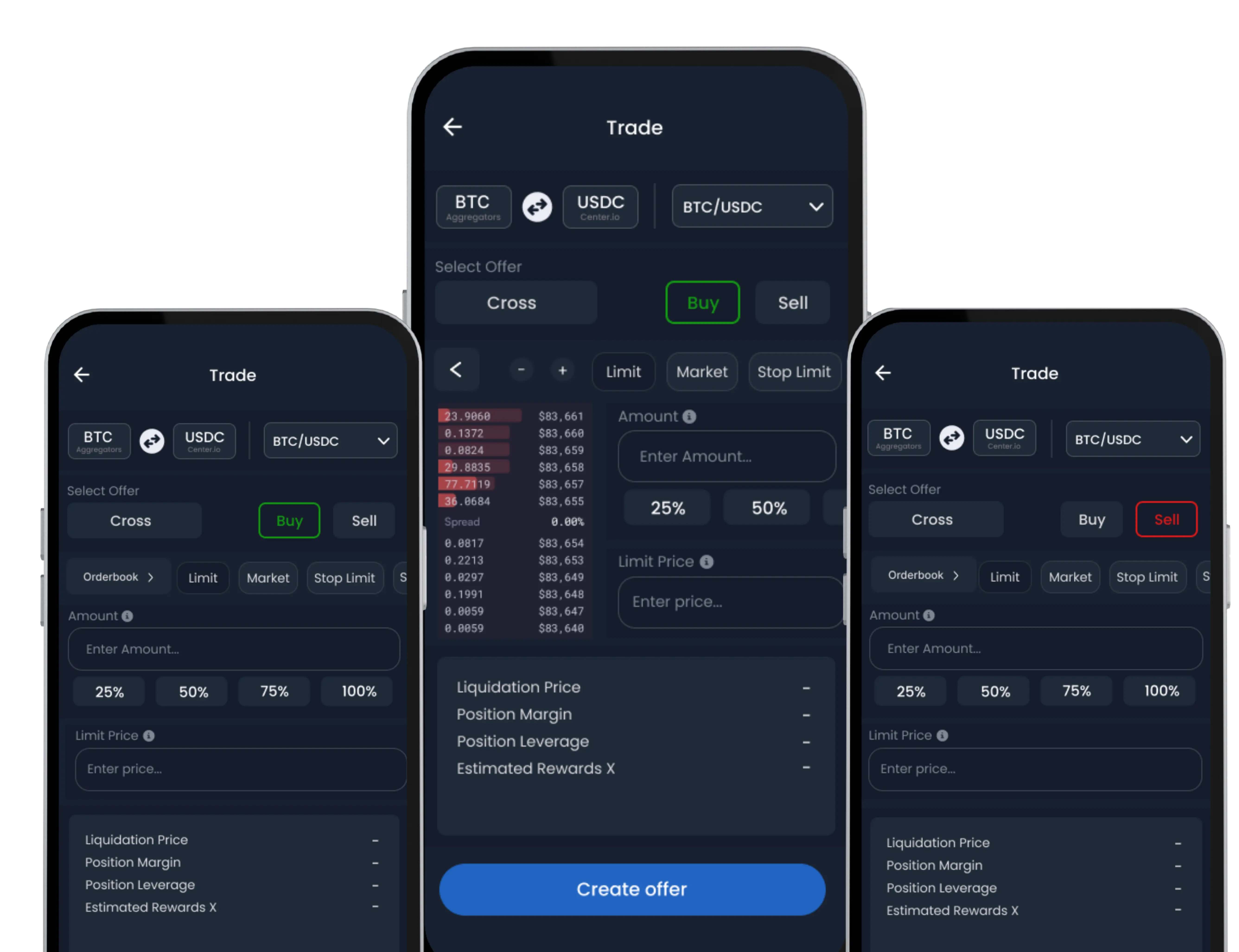
Intent-Based Protocols in DeFi: The Future of AI Trading
Decentralized finance has evolved rapidly over the last few years. From simple token swaps to complex yield strategies, DeFi has unlocked unprecedented financial freedom. Yet one major limitation remains manual execution.
Users must still decide which DEX to use, calculate slippage, compare liquidity pools, manage gas fees, and avoid MEV risks. This complexity creates friction and inefficiency.
This is where Intent-Based Protocols in DeFi are changing the game.
Instead of manually executing transactions, users simply declare their goal and intelligent systems handle the rest.
What Are Intent-Based Protocols in DeFi?
Intent-based protocols represent a shift from imperative execution to declarative outcomes.
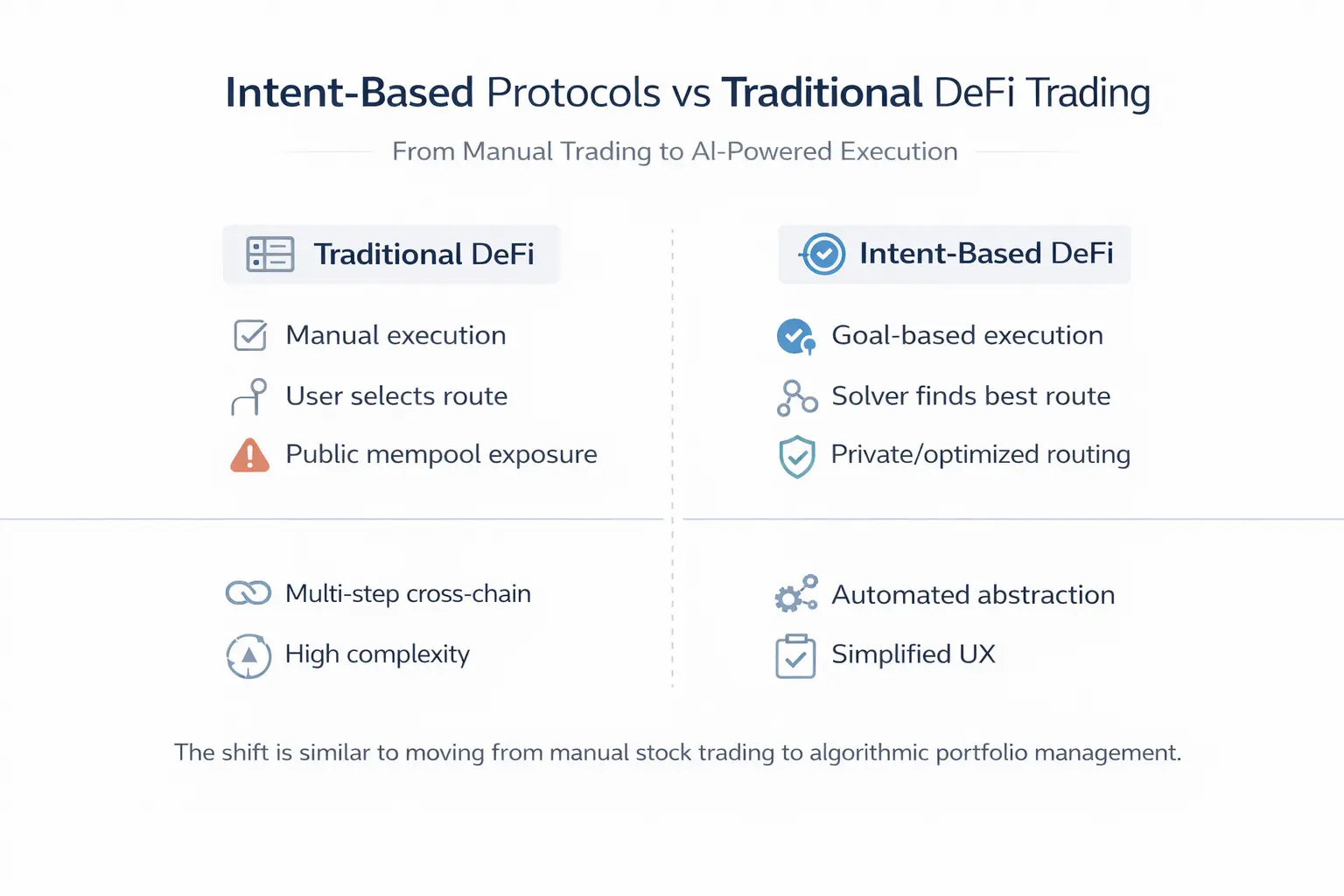
In traditional DeFi:
- You choose the DEX
- You define slippage
- You manually execute the swap
- You manage bridging if cross-chain
In an intent-based system: You simply state your goal.
For example:
- “Swap ETH to USDC at the best available rate.”
- “Rebalance my portfolio to 40% BTC, 40% ETH, 20% stablecoins.”
- “Stake where I can earn at least 8% APY.”
The system then finds the most efficient way to fulfill that intent.
This abstraction layer is what makes intent-based DeFi so powerful.
How Intent-Based Protocols Work
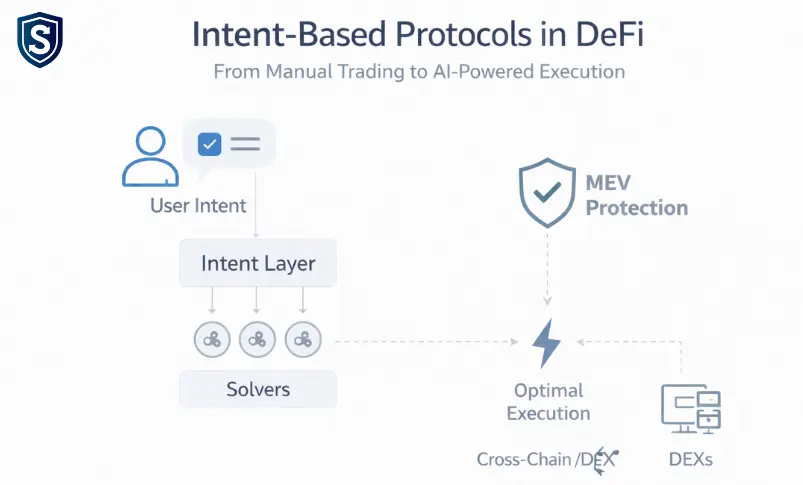
At the core of these systems are specialized actors known as solvers (or fillers).
1. User Declares an Intent
The user submits a high-level objective instead of a transaction path.
2. Solvers Compete
Independent third-party solvers analyze the intent and compete to execute it in the most optimal way.
They search across:
- Multiple DEXs
- Cross-chain bridges
- Liquidity aggregators
- Private order flow networks
The solver offering the best execution fulfills the transaction.
3. Settlement
The transaction is executed and settled on-chain once the best route is determined.
This competitive model ensures:
- Better pricing
- Reduced slippage
- Optimized gas usage
The Role of AI in Intent-Based DeFi
AI significantly enhances the capabilities of intent-based protocols.
1. Natural Language Processing (NLP)
Instead of technical inputs, users could simply type:
“Move my funds to the safest yield strategy with stable returns.”
AI interprets this intent and converts it into executable parameters.
2. Predictive Trade Optimization
AI can:
- Analyze historical liquidity patterns
- Monitor volatility trends
- Predict slippage scenarios
- Detect potential MEV risks
This allows the system to dynamically choose the best execution strategy.
3. Autonomous Strategy Execution
In the future, AI agents may continuously:
- Rebalance portfolios
- Auto-hedge during volatility spikes
- Shift capital between chains
- Optimize yield farming positions
This moves DeFi from manual trading toward fully autonomous finance.
Key Benefits of Intent-Based Protocols in DeFi
1. Improved Efficiency
Solvers search across fragmented liquidity sources to find the optimal execution route. This results in:
- Better pricing
- Lower slippage
- Faster settlement
Instead of users manually comparing platforms, the protocol handles optimization automatically.
2. MEV Protection
Maximal Extractable Value (MEV) is a major problem in DeFi. Public mempool transactions can be front-run or sandwiched.
Intent-based protocols reduce this risk by:
- Keeping intents private before execution
- Using solver competition
- Routing through protected order flow mechanisms
This significantly improves trade security.
3. Gas Optimization & Gasless Trading
Solvers can internalize gas fees into execution pricing.
In some designs:
- Users don’t need to hold native gas tokens
- Transaction costs are abstracted
- The final execution price includes gas
This simplifies onboarding and improves accessibility.
4. Simplified User Experience (UX)
One of DeFi’s biggest barriers is complexity.
Intent-based systems reduce:
- Manual DEX selection
- Cross-chain bridging confusion
- Slippage configuration errors
- Multi-step transaction flows
The result is a smoother and more intuitive trading experience.
Intent-Based Protocols vs Traditional DeFi Trading
Why Intent-Based Protocols Are the Future of AI Trading
As DeFi grows more complex, fragmentation increases:
- Multiple Layer 2 networks
- Cross-chain liquidity
- Aggregators
- Yield strategies
- Derivatives
- Perpetual markets
Manually navigating this ecosystem is unsustainable.
Intent-based protocols act as:
- Liquidity super-aggregators
- Execution intelligence layers
- AI-powered financial agents
In the long term, they may become the default interaction layer for Web3 — abstracting away technical friction and allowing users to focus purely on financial goals.
Challenges and Considerations
While promising, intent-based systems still face challenges:
- Solver centralization risks
- Incentive alignment
- Smart contract security
- Regulatory implications of AI automation
However, ongoing innovation is rapidly addressing these issues.
Final Thoughts
Intent-Based Protocols in DeFi represent a fundamental evolution in decentralized finance.
By shifting from manual execution to outcome-driven trading, and combining this model with AI-powered automation, DeFi becomes:
- More efficient
- More secure
- More accessible
- More intelligent
As AI continues to mature, we may soon see fully autonomous financial agents executing complex multi-step strategies across chains all triggered by simple user-defined intents.
The future of AI trading in DeFi isn’t about faster clicks.
It’s about smarter systems.
Follow us on