The Real Cost of Trading on Centralized Exchanges vs. DEXs
In the fast-evolving world of cryptocurrency trading, understanding the real cost of trading on centralized exchanges vs DEX platforms has become crucial. As traders become more aware of hidden fees, custodial risks, and on-chain transaction costs, the debate around CEX vs DEX comparison grows sharper.
At SwiftEx, we believe that transparency, control, and cost-efficiency are the pillars of modern crypto trading. Let’s dive deep into how centralized exchanges (CEX) differ from decentralized exchanges (DEX) and uncover what you’re truly paying for when you trade.
Understanding Centralized Exchanges vs DEX
A centralized exchange (CEX) acts as an intermediary between buyers and sellers. It holds users’ funds in custodial wallets and manages order books internally. Popular examples include Binance, Coinbase, and Kraken.
On the other hand, a decentralized exchange (DEX) enables peer-to-peer (P2P) transactions directly on the blockchain without intermediaries. Platforms like Uniswap, PancakeSwap, and SwiftEx empower users with non-custodial trading, full ownership of funds, and transparent on-chain execution.
The centralized exchange vs DEX debate ultimately comes down to trust, control, and true trading cost.
CEX vs DEX Trading Fees: The Hidden Price of Convenience
One of the most overlooked aspects of trading is the cost of trading crypto.
Trading Fees on Centralized Exchanges
CEX platforms typically charge:
- Maker and taker fees: 0.1% to 0.5% per trade
- Deposit and withdrawal fees: Vary depending on the currency or network
- Hidden costs: Spreads between buy/sell prices and potential slippage during high volatility
While these fees seem small, they accumulate over time especially for active traders. CEXs also control withdrawal limits and may impose custodial risks, freezing assets during audits or regulatory reviews.
Trading Fees on DEXs
On a decentralized exchange, trades incur blockchain transaction (gas) fees and liquidity provider (LP) fees.
However, with optimized chains and low-fee decentralized exchanges like SwiftEx, these costs are minimal. Our multi-chain DEX architecture ensures users enjoy low-cost, fast swaps across networks like Ethereum, BNB Chain, and Polygon without sacrificing security or speed.
DEX trading eliminates hidden fees since every cost is visible on-chain, ensuring exchange transparency and fair pricing.
Slippage and Liquidity: The Silent Cost Factors
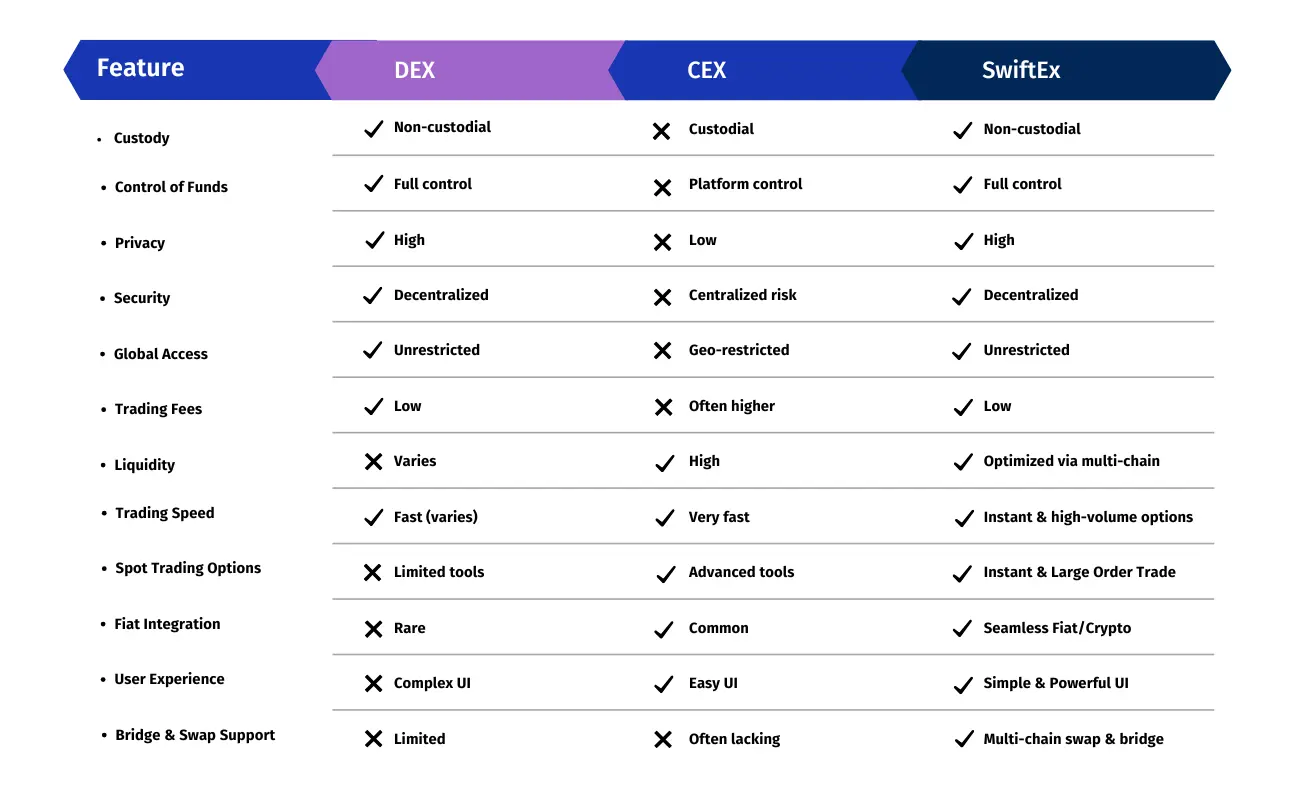
Another critical element in the CEX vs DEX comparison is liquidity.
Liquidity and Price Impact in CEX
Centralized exchanges often boast high liquidity, enabling large-volume trades with minimal price impact. However, this liquidity is custodial and centralized meaning the exchange controls it. If the exchange halts operations, your access to liquidity disappears.
Liquidity and Price Impact in DEX
DEX liquidity is powered by liquidity pools, contributed by users who earn trading fees in return. Though early DEXs suffered from low liquidity, modern DeFi trading platforms like SwiftEx have solved this by aggregating liquidity from multiple chains.
This innovation minimizes slippage in DEX trading, allowing users to trade efficiently and with transparency. Crypto liquidity pools also give traders and investors new earning opportunities something unavailable in traditional exchanges.
Custodial vs Non-Custodial Wallets: Who Owns Your Crypto?
In custodial exchanges, the platform holds your private keys. You effectively trade IOUs, not actual crypto ownership. If a centralized exchange gets hacked or faces insolvency, your assets can be lost or frozen as seen in high-profile exchange collapses.
By contrast, non-custodial trading on DEXs ensures that you retain full control of your digital assets. SwiftEx empowers users with multi-chain wallet access, allowing seamless swaps, bridges, and conversions all without compromising self-custody.
This custodial vs non-custodial wallet distinction defines the true freedom of decentralized finance.
Security vs Convenience in Crypto Trading
Security remains a top priority for all traders, but convenience often comes at a cost.
Centralized Exchanges
CEXs offer familiar interfaces, faster fiat conversions, and professional-grade tools. Yet, their custodial nature exposes users to hacking, insider manipulation, and regulatory freezes. Users depend entirely on the exchange’s internal security protocols.
Decentralized Exchanges
DEXs prioritize security and transparency through on-chain smart contracts and immutable records. Every trade is verifiable on the blockchain, ensuring trustless execution.
At SwiftEx, we bridge this gap offering the security of DeFi with the convenience of CEXs, through an intuitive, mobile-first platform that allows instant fiat/crypto conversions.
The Real Cost of Crypto Trading: What Traders Overlook
When evaluating the real cost of trading crypto, most users consider only the visible fees. The hidden costs from slippage and withdrawal charges to custodial risks often outweigh the apparent benefits of centralized trading.
DEXs like SwiftEx redefine this structure:
- Transparent on-chain trading costs
- No hidden spreads or custodial limits
- Low-fee swaps and bridges
- Global access and censorship resistance
By adopting non-custodial DeFi platforms, traders save not only money but also safeguard their financial sovereignty.
Why SwiftEx Leads the Decentralized Revolution
SwiftEx stands at the forefront of the DeFi trading ecosystem, delivering the best of both worlds CEX-grade performance with DEX-level freedom.
Here’s what sets us apart:
- Non-custodial, multi-chain wallet: Manage assets across multiple blockchains
- Low-fee trading: Optimized swap routes reduce gas costs
- Seamless fiat and crypto conversions: Trade globally in seconds
- Full transparency: On-chain execution ensures no hidden charges
- Secure and accessible: Control your assets anywhere, anytime
With SwiftEx, you experience a fair, secure, and cost-efficient trading environment designed for the next generation of crypto users.
Conclusion: The Future Belongs to Decentralization
The centralized exchange vs DEX debate is more than just about fees it’s about trust, control, and transparency. While CEXs may offer convenience, they compromise on autonomy and expose traders to hidden costs.
DEXs, led by platforms like SwiftEx, provide the ultimate solution: secure, low-fee, and borderless trading where users truly own their assets.
As the crypto landscape continues to mature, the real cost of trading will increasingly favor decentralized platforms those built on principles of fairness, efficiency, and freedom.
Follow us on