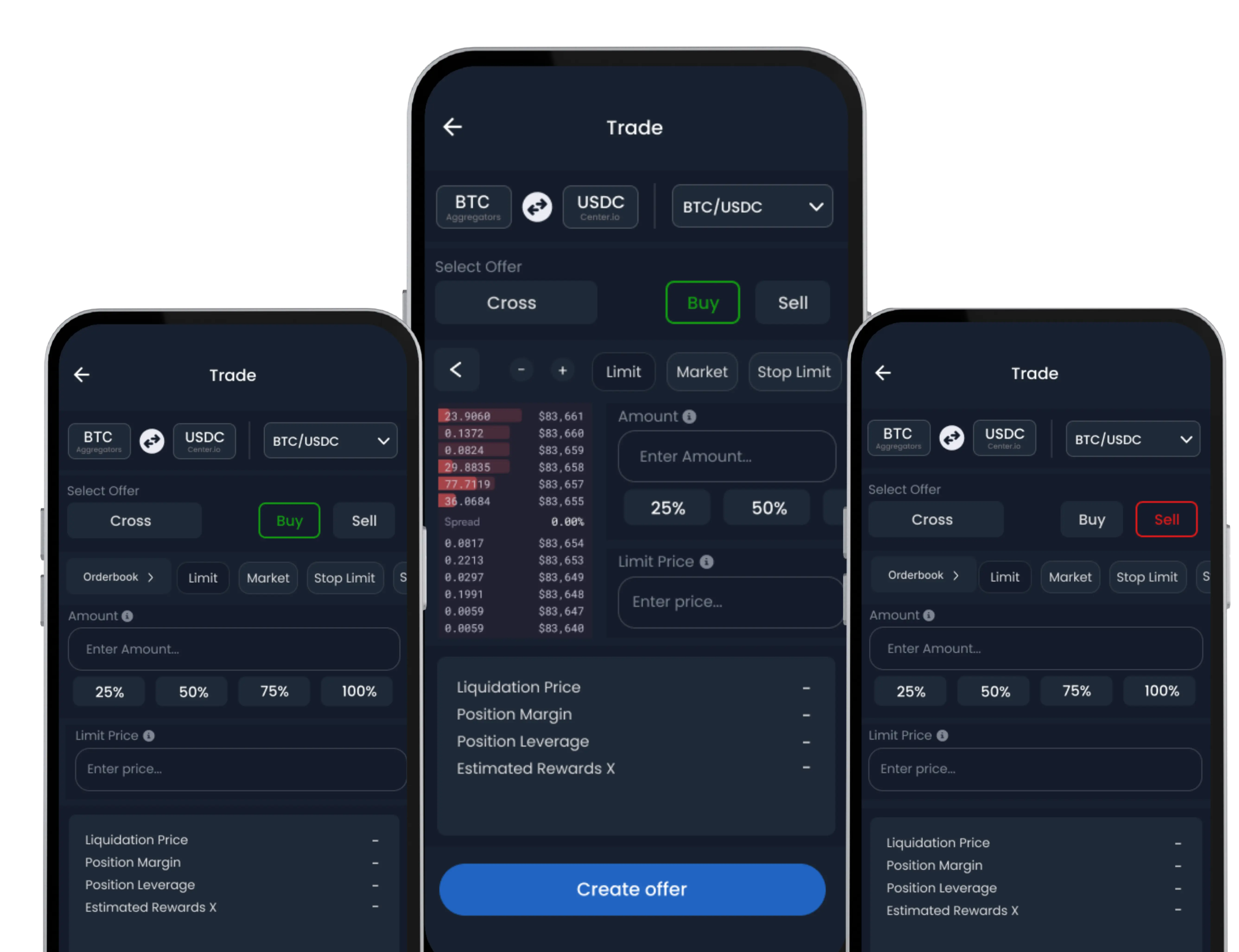
AgentFi and Autonomous AI Trading Agents in 2026: Architecture, Intent Protocols, and Machine Micropayments

1. Why Human-Centric DeFi Fails Autonomous Trading Agents
Conventional decentralized finance was engineered for human workflows: manual wallet popups, gas estimation, and interactive transaction signing. For autonomous algorithmic agents, this paradigm introduces three critical failure points:
- Runtime Key Exposure: Bots storing raw private keys in server memory or environment variables create high-value attack surfaces. A memory dump or prompt-injection jailbreak exposes full treasury balances.
- Bridge Latency and Honey-Pots: Cross-chain swaps through conventional lock-and-mint bridges require 15 to 45 minutes of multi-signature confirmations. According to incident ledgers compiled by Rekt.news, bridge smart contract exploits have drained over $3.14 billion since 2021, led by the Ronin Network validator compromise ($625M), Wormhole signature bypass ($320M), Nomad bridge replay ($190M), and Multichain breach ($126M).
- Mempool Front-Running: Public mempool broadcasts expose agent transactions to MEV searchers, triggering sandwich attacks and forced maximum slippage on automated order flows.
AgentFi replaces these vulnerabilities with automated infrastructure: hardware-rooted cryptographic delegation, atomic off-chain intent settlement, and sub-second machine micropayments.
2. The 4-Layer AgentFi Architecture
Production-grade AgentFi decouples agent logic from raw key custody and bridge management across four distinct layers:
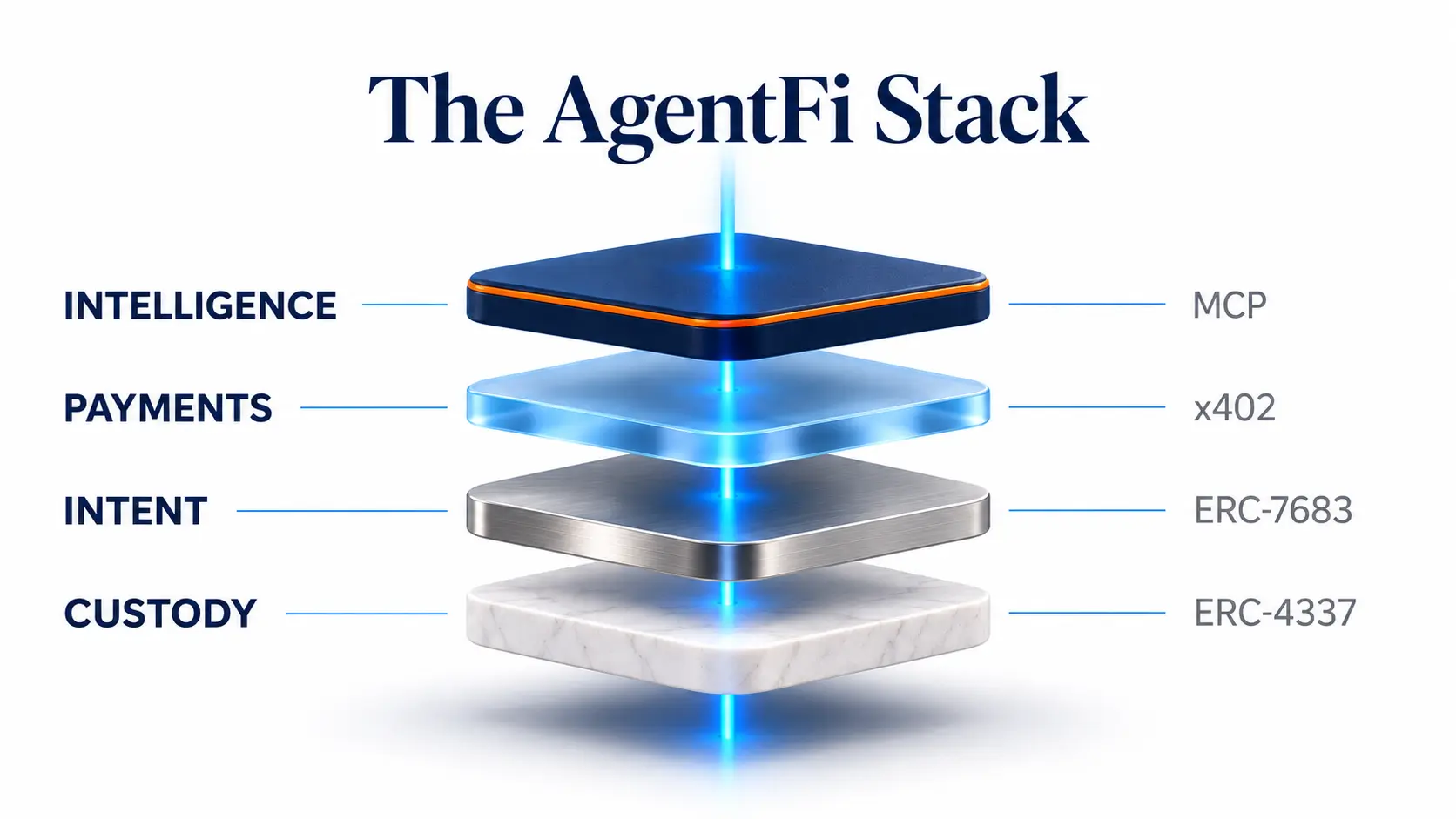
- Layer 1: Cryptographic Custody and Delegation (ERC-4337 and Passkeys): The master key stays in a hardware enclave (Apple Secure Enclave or Android HSM). The operator issues time-bound, scoped Session Keys via ERC-4337 smart accounts, enforcing on-chain spending limits that prevent balance drain even if the agent model is hijacked.
- Layer 2: Intent-Based Trading and Settlement (ERC-7683): The agent signs declarative orders specifying only desired outcomes (e.g., swap 10 ETH on Arbitrum for at least 34,000 USDC on Base by a set deadline). Specialized third-party solvers execute the trade using private liquidity, absorbing all bridging and reorg risks.
- Layer 3: Machine Commerce Rail (x402 HTTP Standard): Replaces credit-card subscriptions with pay-per-request API queries. The agent receives an HTTP 402 challenge, signs a USDC micropayment over standard HTTP headers, and accesses live order-book depth in under two seconds.
- Layer 4: Intelligence and Tooling (Model Context Protocol & Oracles): Language models access on-chain routing via Model Context Protocol (MCP) servers, calling standardized tools to fetch market depth, generate intent payloads, and monitor execution receipts.
3. Account Abstraction and Scoped Session Keys
Traditional Externally Owned Accounts (EOAs) grant all-or-nothing signing authority: compromising the private key empties the wallet. Smart accounts with ERC-4337 session delegation enforce granular, programmatic guardrails directly on-chain:
- Per-Trade Spending Limits: Individual transactions cannot exceed a hard ceiling (e.g., $5,000 per trade).
- Rolling Daily Volume Caps: Cumulative turnover is capped (e.g., $25,000 per 24-hour window), neutralizing algorithmic runaway loops.
- Contract and Asset Whitelists: The key is restricted to verified settlement contracts and approved tokens (e.g., USDC, XLM, ETH). Calls to unapproved addresses automatically revert.
- Slippage Bounds: Smart contracts enforce strict maximum price deviation thresholds (e.g., 0.3%).
- Automated Key Expiration: Session keys automatically expire after a predetermined duration (e.g., 7 days), requiring renewed operator authorization.
- Paymaster Gas Sponsorship: ERC-4337 Paymasters sponsor multi-chain gas or deduct network fees directly from settlement output in USDC, eliminating the need for agents to hold separate native gas tokens across multiple networks.
4. The Machine Commerce Layer: x402 Micropayments for Data and Compute
Algorithmic trading models require real-time market depth and low-latency inference. However, corporate credit cards impose 2.9% + $0.30 fixed merchant fees, making sub-cent machine payments economically unfeasible.
The x402 protocol, originated by Coinbase and maintained under the Linux Foundation, activates the internet's dormant status code (RFC 2068 / RFC 2616 HTTP 402 Payment Required) using stablecoins on high-throughput blockchains.
The 4-Step x402 Handshake Lifecycle
- Request: The AI agent issues an unauthenticated HTTP GET request to an API endpoint.
- Challenge: The server returns HTTP 402 Payment Required containing price metadata (e.g., 0.0015 USDC), payout address, network identifier (such as Stellar or Base), and a single-use replay nonce.
- Authorization: The agent verifies the fee against its local budget, signs an EIP-712 or Stellar transaction authorization, and resends the request with the payment signature in the HTTP headers.
- Settlement: The server validates the cryptographic signature, burns the nonce to prevent replays, and returns HTTP 200 OK with payload data in under 2 seconds.
Machine Payment Rail Comparison
- x402 Protocol: Permissionless machine-to-machine micropayments. Settles in sub-cent stablecoins (USDC, EURC) on high-speed networks (Stellar, Base, Arbitrum) with zero human intervention.
- Google AP2 (Agent Payment Protocol): Consumer-facing delegated commerce using Google Pay and fiat banking rails for human travel and retail purchases.
- Stripe MPP (Machine Payment Protocol): Enterprise API billing aggregating service consumption onto corporate cards via monthly billing cycles.
5. Intent-Based Execution: ERC-7683, Solver Networks, and MEV Protection
Standard Automated Market Maker (AMM) routing requires multi-step contract calls, token approvals, and public mempool broadcasts that expose trades to sandwich bots.
ERC-7683, co-authored by Across Protocol and Uniswap Labs, standardizes cross-chain intent interfaces. An agent signs an off-chain order struct containing:
- Swapper smart account address.
- Replay-protection nonce and expiration deadline.
- Origin and destination chain IDs.
- Minimum acceptable output token amount.
Primary Intent Routing Implementations
- CoW Protocol: Bundles orders into off-chain batch auctions. Trades match peer-to-peer via Coincidence of Wants (CoW), bypassing AMM pools to neutralize MEV and
- front-running. CoW provides an official Model Context Protocol (MCP) server for direct LLM integration.
- UniswapX: Runs decaying Dutch auctions across on-chain liquidity pools and private fillers, utilizing Permit2 for gasless order authorizations.
- Across Protocol: Provides optimistic cross-chain intent settlement. Fillers advance native assets to destination addresses within seconds, while settlement validity is verified optimistically via UMA oracles.
- Multi-Chain Intent Networks: Bridge EVM rollups (Base, Arbitrum) with non-EVM ecosystems like Stellar (utilizing Soroban smart contracts and the SDEX order book), settling native assets directly on destination chains without wrapped token bridge risk.
6. Architectural Evaluation: AgentFi vs. Legacy Execution Models
- Private Key Custody: Legacy bots store raw private keys in server environment files or custodial exchange accounts. AgentFi isolates root signing keys in biometric hardware enclaves, delegating execution to scoped ERC-4337 session keys.
- Bridge Vulnerability: Conventional cross-chain swaps route through lock-and-mint bridge vaults that have suffered over $3.14 billion in exploits (Ronin $625M, Wormhole $320M, Nomad $190M, Multichain $126M). AgentFi intent solvers deliver native assets directly on destination chains, bypassing shared bridge pools.
- MEV Defense: Public mempool transactions are vulnerable to sandwich attacks and predatory arbitrage. Intent solvers clear trades via private auctions and batch clearing at uniform clearing prices.
- Data Monetization: Legacy systems rely on $1,000+/month SaaS subscriptions or expensive on-chain oracle calls. AgentFi uses x402 HTTP micropayments to purchase individual data points on demand in under two seconds.
- Multi-Chain Breadth: Standard bots manage native gas balances across each target network. Intent networks aggregate heterogeneous execution layers—including EVM rollups and Stellar SDEX/Soroban—under unified off-chain solver quotes.
- Settlement Latency: Lock-and-mint bridge confirmations require 15 to 45 minutes of multi-signature validation. Intent-based order fills settle natively in under 10 seconds.
- Exploit Containment: Compromising a standard bot private key results in total treasury loss. In AgentFi, session keys restrict exposure to strict spending ceilings, token whitelists, and automatic expirations.
- Gas Economics: Legacy multi-hop swaps incur cumulative fees across token approvals, bridging, and decentralized exchange routers. AgentFi bundles execution costs into a single net settlement quote or sponsors fees via Paymasters.
7. Operational Workflow: How an AI Agent Executes Trades On-Chain
A complete lifecycle trace demonstrates how an autonomous agent executes a trade in production:
- Session Key Issuance: The human operator authenticates with a biometric Passkey to grant the agent an ephemeral Session Key. The smart contract enforces constraints: $5,000 maximum trade cap, $25,000 rolling 24-hour turnover, whitelisted assets limited to USDC, ETH, and XLM, and a 7-day expiration.
- Market Data Acquisition via x402: The agent queries an order-book depth API. The server issues an HTTP 402 challenge requiring 0.001 USDC. The agent verifies the cost, signs the authorization header, and receives live market depth in 1.5 seconds.
- Intent Generation via MCP Tooling: Identifying an arbitrage spread between Arbitrum and Base, the agent calls an MCP intent tool: input of 2 ETH on Arbitrum, minimum return of 6,800 USDC on Base, and a 30-second execution window.
- Gasless Intent Broadcast: The tool formats an ERC-7683 order struct. The agent signs the payload off-chain with its Session Key using EIP-712 and Permit2. Gas is sponsored by a Paymaster, and the intent is submitted directly to the solver network.
- Solver Settlement: Fillers bid to execute the intent. The winning solver transfers 6,812 USDC directly into the agent's smart account on Base. The solver submits cryptographic proof of delivery to the Arbitrum escrow contract to claim the 2 ETH. The swap settles in under 8 seconds without exposing private keys or routing through bridge vaults.
8. Security Vectors and Risk Mitigation in AgentFi
- Vector 1: Prompt Injection and Model Hijacking: Adversarial data in market feeds could attempt to prompt-inject the model into transferring funds.
- Countermeasure: On-chain ERC-4337 smart contracts enforce immutable guardrails. Transfers to unapproved addresses, trades exceeding $5,000, or unauthorized contract calls revert at the blockchain layer, regardless of LLM reasoning errors.
- Vector 2: x402 Payment Replay Attacks: Intercepted HTTP headers could be replayed to drain micro-balances.
- Countermeasure: Servers issue cryptographically random nonces with 30- to 60-second validity windows. Once verified, nonces are permanently invalidated; repeated requests return HTTP 401 Unauthorized.
- Vector 3: Solver Delay and Pricing Arbitrage: Solvers could delay execution to capture market movements before filling at the worst allowable limit.
- Countermeasure: ERC-7683 orders specify granular execution deadlines. Expired orders revert automatically, freeing escrowed funds and allowing the agent to re-auction the order.
- Vector 4: Oracle Poisoning and Manipulated Signals: Attackers spoof low-liquidity order books to bait bots into bad trades.
- Countermeasure: Agents implement statistical multi-source validation, comparing prices across independent decentralized order books and oracles before formulating intents.
9. Conclusion: The Autonomous Financial Stack in 2026
The convergence of Account Abstraction, the x402 machine commerce standard, and ERC-7683 intent routing resolves the friction of human-centric DeFi. Autonomous software agents can custody capital safely behind hardware-backed session keys, purchase data feeds on demand via sub-cent micropayments, and settle cross-chain trades natively in seconds without bridge exposure.
Key Architectural Takeaways
- Hardware-Rooted Non-Custodial Custody: Scoped ERC-4337 session keys protect capital from prompt injections and server breaches.
- Declarative Intent Settlement: ERC-7683 shifts bridging risks, MEV exposure, and multi-chain gas management to competing professional solvers.
- On-Demand Machine Payments: x402 replaces costly credit-card billing with sub-second, sub-cent stablecoin micropayments over standard HTTP headers.
- Native Cross-Chain Execution: Eliminates centralized lock-and-mint bridge vaults by routing capital natively across EVM networks and high-throughput order books like Stellar SDEX.
Official SwiftEx Links
- Official Website: swiftexchange.io
- SwiftEx Wallet: swiftexwallet.com
- SwiftEx Trading App: app.swiftexchange.io
- Official X / Twitter: @swiftex_wallet
- Medium Publication: medium.com/@swiftexchange.io
- Official Blog: swiftexchange.io/blog
Related Research and Guides
- ERC-7683 Solver War: Cross-Chain Intent Infrastructure: swiftexchange.io/blog/erc-7683-solver-war-cross-chain-intents
- The x402 Protocol Explained: Autonomous AI Agent Micropayments: swiftexchange.io/blog/x402-protocol-explained-ai-agent-micropayments
- Best Non-Custodial Cross-Chain DEX in 2026: swiftexchange.io/blog/best-non-custodial-cross-chain-dex
- How Stellar SDEX Works: On-Chain Order Book Trading Explained: swiftexchange.io/blog/stellar-sdex-explained-on-chain-trading
Primary External Sources
- ERC-7683 Cross-Chain Intent Standard: erc7683.org
- x402 Foundation Official Documentation: x402.org
- Coinbase Developer Platform (x402 Specifications): coinbase.com/developer-platform
- Internet Engineering Task Force (RFC 2068 / RFC 2616 HTTP Status Codes): datatracker.ietf.org/doc/html/rfc2616
- Ethereum ERC-4337 Account Abstraction Specifications: eips.ethereum.org/EIPS/eip-4337
- CoW Protocol Developer Documentation & MCP Server: docs.cow.fi
- Across Protocol Cross-Chain Intent Documentation: docs.across.to
- Stellar Developers (Protocol 21 & Soroban Smart Contracts): developers.stellar.org
- Rekt.news Leaderboard & Incident Audit Database: rekt.news