Institutional Stellar Adoption Is Here. Here’s Why XLM Hasn’t Priced It In.

Introduction: The Adoption Nobody’s Pricing In
A $114 trillion clearinghouse just picked Stellar. A $1.8 trillion asset manager put XLM on its shelf. Regulated futures are already live.
None of that shows up in the price.
Stellar spent years as the payments chain most of crypto ignored. That changed in 2026. A run of regulated institutions built real infrastructure on the network this year, and XLM still trades like nobody noticed.
This blog breaks down exactly:
- What the DTCC actually agreed to, and why 2027 matters more than the headline
- What Franklin Templeton, CME, and MoneyGram built on Stellar this year
- Where the CLARITY Act stands in the Senate right now
- Why the price hasn’t caught up to any of it
- What retail holders can actually do with this information
The DTCC Deal: Bigger Than the Headline, Slower Than the Hype
On May 27, 2026, the Depository Trust & Clearing Corporation said it would connect its tokenization service to Stellar.
Stellar became the first public blockchain named in DTCC’s multi-chain strategy.
XLM surged double digits within hours. It gained more than 50% for the week.
The numbers behind the deal:
- DTCC settles close to $2.5 quadrillion in securities transactions a year
- It holds custody over $114 trillion in US assets
- The relationship traces back nearly a decade through Securrency, the compliance firm DTCC acquired in 2023
- An SEC no-action letter from December 2025 authorizes a three-year pilot
None of it is live yet.
Testnet work begins around July 2026. Tokenized Russell 1000 stocks, index ETFs, and US Treasuries aren’t expected on Stellar until the first half of 2027.
A partnership announcement and a functioning settlement system are two different things. The market spent a week trading the first one like it was the second.
Franklin Templeton and CME Built Rails Institutions Actually Use
Franklin Templeton’s tokenized government money fund, BENJI, now holds $1.98 billion in assets under management. That total spans nine blockchains, including Ethereum, Solana, and Polygon.
Stellar is where BENJI started in 2021. It still anchors the largest share of the fund’s holders. By dollar value, though, Stellar’s slice sits around $650 million, the second-largest real-world asset on the network behind a separate tokenization platform.
CME Group listed XLM futures in February 2026. Smaller “Micro Lumens” contracts came with it, built for traders who aren’t running a hedge fund.
Daily futures volume topped $150 million by March.
This is capital and infrastructure moving into live products, not a pilot sitting in a press release.
Payments Kept Expanding Underneath the Headlines
MoneyGram
MoneyGram extended its Stellar partnership in April. Stablecoin-powered cash access now reaches El Salvador, on top of the existing rollout in Colombia.
PayPal
PYUSD keeps settling on the network. No new headline needed, just steady volume.
Matrixdock
In late June, Matrixdock brought its LBMA-backed gold token to Stellar. The move pushed the network’s real-world asset total past $3.35 billion, more than four times where it stood at the end of 2025.
These stories don’t move the price the way a DTCC headline does.
They’re also the part least likely to reverse.
A Regulated ETF Just Put XLM on Its Shelf
On June 12, the SEC cleared NYSE Arca to list T. Rowe Price’s active crypto ETF.
XLM made the eligible asset list, alongside Bitcoin, Ethereum, Solana, and XRP.
The fund isn’t trading yet.
A $1.8 trillion asset manager putting XLM on an approved list still carries different weight than another crypto-native partnership post.
The Legal Ground Shifted, Even Though the Law Hasn’t Passed
Regulators named XLM a digital commodity on March 17, 2026. Oversight shifted toward the CFTC, the same legal foundation that let Bitcoin and Ethereum ETFs launch.
The bigger prize, the CLARITY Act, is still stuck.
Where the Bill Stands
- Passed the House 294–134 in July 2025
- Cleared the Senate Banking Committee 15–9 in May 2026
- Sits on the Senate’s legislative calendar, eligible for a floor vote
- Still needs 60 votes, reconciliation with the House version, and a presidential signature
Galaxy Digital cut its odds of the bill passing in 2026 to 50% on June 29.
Regulatory clarity keeps getting closer without actually arriving.
Why the Price Hasn’t Moved With the News
Supply Is Concentrated at the Top
As of late June:
- 13 wallets holding more than 500 million XLM each control close to half the circulating supply
- Add wallets holding 50 to 500 million XLM, and fewer than 120 addresses control roughly three-quarters of all XLM in existence
- More than 10 million wallets hold under 1,000 XLM each, worth around $200 or less at recent prices
That’s the retail base. It’s a small slice of a heavily concentrated pie.
Issuance Never Stops
Stellar caps total supply at 50 billion XLM. The Stellar Development Foundation controls a large share of it for grants and ecosystem funding.
Steady issuance for development work sits alongside any institutional demand. That caps how much of the demand actually shows up in price.
History Keeps Repeating
XLM spiked more than 600% after the 2024 US election, then gave back nearly 69% of that move.
It rallied 140% around the PayPal stablecoin launch in mid-2025, then corrected almost 74%.
The DTCC rally followed the same script: a sharp spike toward resistance near $0.22 to $0.26, then a pullback into the high teens and low $0.20s.
Institutional news moves the price fast. It hasn’t kept it there yet

How Holders Are Getting Exposure to This Story
Paper exposure now runs through more than one door.
- The Grayscale Stellar Lumens Trust (GXLM) already trades in a regular brokerage account
- CME’s Micro Lumens futures give smaller traders regulated derivatives exposure
- More ETF-style products will likely follow the T. Rowe Price filing
Getting exposure this way skips the wallet and the seed phrase entirely.
Direct exposure is a different thing. A trust or a futures contract tracks XLM’s price. It doesn’t let you move funds, swap assets on Stellar’s built-in DEX, or use the network the way it’s actually built to be used.
Where a Non-Custodial Wallet Fits
For holders who want that control, a non-custodial wallet built for Stellar is the more literal way to hold what the DTCC and Franklin Templeton are building on top of.
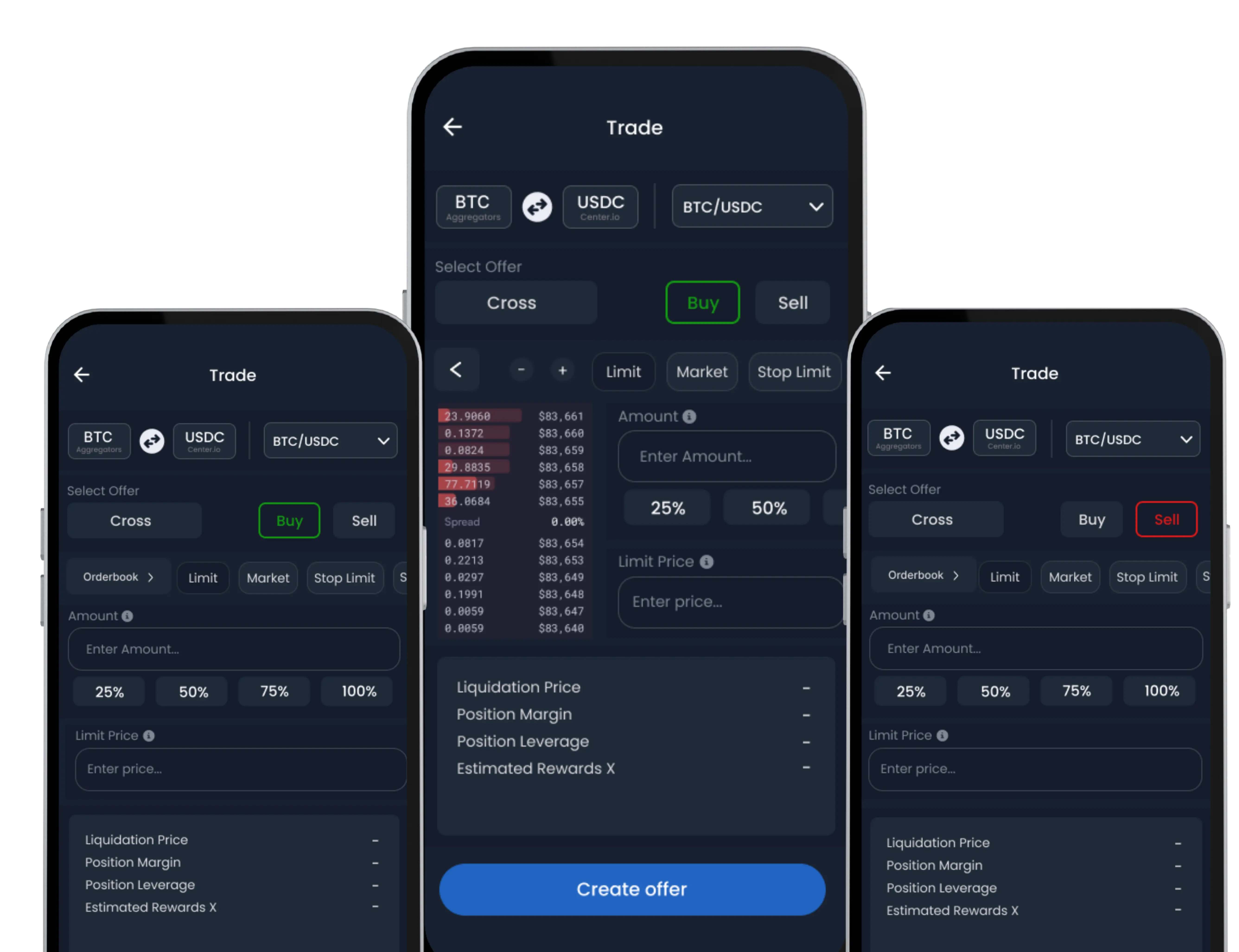
SwiftEx is built specifically for the Stellar network. Keys stay with the user, never on a company server. Trades route directly onto Stellar’s built-in DEX, the same settlement layer DTCC is testing against for tokenized securities.
That’s a different kind of exposure than a ticker on a brokerage screen. It’s the network itself.
Milestones Worth Tracking Over the Next Two Quarters
- Protocol 27’s mainnet vote on July 8, upgrading smart contract account security
- DTCC’s testnet progress through the second half of 2026, ahead of the 2027 live target
- A Senate floor vote on the CLARITY Act, and whether the stablecoin yield fight gets resolved
- Meridian 2026 in Q3, where SDF has historically used the stage for partnership announcements
- Whether the T. Rowe Price ETF, or a dedicated XLM spot product, actually starts trading
Final Thoughts
Institutional adoption of Stellar isn’t a rumor anymore.
A clearinghouse that moves $2.5 quadrillion a year. A $1.8 trillion asset manager. A payments network with half a million retail locations. All of it built something real on the chain within the past six months.
What hasn’t happened yet is the part retail holders actually feel: price movement that sustainably reflects any of it.
That gap between infrastructure and price is either the opportunity or the trap. It depends on how patient you are, and how closely you track the milestones instead of the headlines about them.
Follow us on